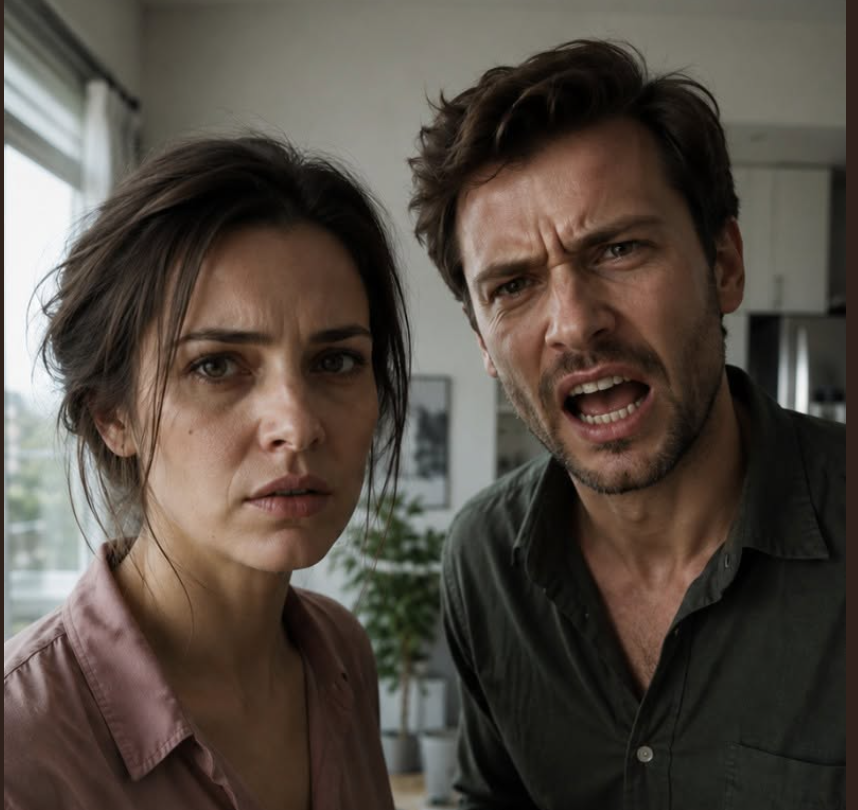
“Have you completely lost your mind?! You reported it stolen?!” Sergey roared into the receiver, his voice shredding into raw, distorted static against the tiny speaker of my phone.
I held the handset an inch away from my ear, watching a solitary sparrow peck at a dry crust of bread near the curb. My pulse was steady. My voice, when I finally spoke, was measured, devoid of the theatrical tremors he usually expected from a woman pushed into a corner.
“I haven’t lost anything, Sergey,” I answered quietly. “Least of all my mind. I simply happen to know that personal property is personal. If an item belongs to me, it does not belong to the commune. And if it disappears without my consent, the criminal code calls it theft.”
I have always despised domestic drama. Screaming matches make my blood pressure spike behind my temples like a dull hammer, and the hysterical shrieking of women who beg and plead makes my jaw ache with phantom tension. When I walked down to the asphalt courtyard that brisk October morning, wearing my sensible knit cardigan and carrying two sturdy canvas tote bags meant for agricultural seedlings, I expected to see the smooth, metallic sheen of wet asphalt—the exact paint color of my brand-new Lada Granta. It was parked where I had left it beneath the rowan tree, or rather, it was supposed to be. Instead, there was only a rectangle of dry gray concrete marked by an ancient, iridescent smear of transmission oil left behind by an old neighbor’s Zhiguli.
I did not scream. I did not drop my tote bags or theatrically throw my hands toward the gray heavens. I stood there, rooted to the gravel edge of the pavement, staring at the empty space until the ambient noise of the morning traffic faded into a muffled, low hum, like being plunged abruptly beneath five feet of river water.
Sergey had the spare keys. He had taken them the evening before, leaning against the kitchen doorframe with that casual, half-guilty smirk he had perfected over twenty-five years of marriage, muttering something about needing to adjust the headlights or grease the door hinges in the community garage for half an hour. He had returned well past midnight, smelling faintly of cheap tobacco and cold autumn wind, slipping beneath the duvet without a word. I had felt a momentary surge of sympathy back then: the man is pushing sixty-three, his knees bother him, he works long shifts at the district heating plant—let him sleep.
What a fool I had been. That car was not marital property, nor was it some luxury bought on credit to inflate a pair of aging egos. I had purchased that car two months prior, down to the very last kopeck, using the modest sum left over from selling my late mother’s one-room apartment in the old textile workers’ district. I had spent forty years working as an accountant in municipal transport, keeping meticulous ledgers while my mother withered away under the agonizing, slow march of Parkinson’s disease. For five years, I cleaned bedsores, counted pennies, boiled broths, and saved every scrap of paper. When she passed, that small apartment was sold, and after the funeral fees and the monument were paid for, there was enough left for the Granta.
I hadn’t bought it to show off to the neighbors. I bought it for freedom. I bought it because at sixty years of age, with an aching lumbar spine and worn cartilage, I refused to spend another single autumn dragging heavy crates of heirloom tomato seedlings and fifty-pound sacks of potatoes onto crowded, sweltering suburban buses where passengers shoved you with elbows as sharp as axes. It was my private capsule of dignity.
I dialed Sergey’s number.
“Yeah, hello,” he mumbled, his voice thick with the gravel of interrupted sleep.
“Seryozha, where is my car?”
The silence on the line dragged out. It lasted precisely long enough for me to count to five, watching the autumn leaves drift across the empty parking spot.
“Nadya, listen… just don’t get all worked up,” he said, adopting that patronizing, soothing tone one uses with an irrational child or a hysterical pet. “I let Danka borrow it for a few days. He got a job doing express courier deliveries across town. The boy needs to earn a living; he has to get back on his feet. You’re retired anyway, Nadya. You can take the suburban bus to the plot, can’t you? Is it really that hard for you to help out family?”
Just like that. No hesitation. Not “I made a mistake,” not “I’m sorry, I should have asked,” not even an attempt to disguise the theft as a temporary emergency. Simply: *You can take the bus.*
Danka was his thirty-year-old son from his first marriage—a hulking, heavy-shouldered man with shifty, watery eyes and soft, uncalloused hands, who had never managed to hold any job for more than three consecutive weeks. When he had returned from his mandatory military service five years ago, Sergey had begged me to let him occupy our spare room “just until he finds his footing.” Two weeks later, an antique silver cigarette case that had belonged to my grandfather—a veteran of the Baltic Fleet—vanished from the sideboard. Danka swore on his mother’s grave that he had never seen it, claiming an itinerant repairman must have pocketed it. Sergey had immediately defended his blood, scowling at me as though I were a heartless witch for suspecting a boy who spent eighteen hours a day playing online poker in his socks. I had swallowed my pride back then; I had held my tongue for the sake of an uneasy domestic peace.
And now, this pampered, parasitic man-child was burning my fuel, grinding my gears, and speeding across the city bypass in my vehicle.
“Seryozha,” I said, keeping my vocal cords as level as a ruled ledger line, “you have exactly one hour to get that car back into its parking spot. One hour. I have to go to the botanical nursery to pick up winter cabbage and berry bushes.”
The line exploded. Sergey began shouting so loudly that a woman walking a miniature pinscher across the courtyard glanced in my direction. He yelled that I was a cold-hearted, sterile egotist; that I had never loved his boy; that Daniil was trying to become an honest working man while I choked everyone around me with my miserable dirt-farming and dacha soil; that he, Sergey, was the man of the house, and he had promised his son transport, and he was a man of his word.
I ended the call without another syllable.
I took the elevator back up to the fourth floor, went straight into the bedroom, and pulled a vintage wooden jewelry box with a faded, decoupage rose on the lid from the back of the wardrobe. Inside lay the vehicle’s original title, the registration certificate, the sales contract from the dealership, and the stamped notary deed proving the inheritance funds had belonged solely to me prior to purchase. Beside them was a small stack of neatly printed screenshots of our messaging history. Just three weeks earlier, I had sent Sergey a message: *“Under no circumstances do you permit third parties, including Daniil, behind the wheel of my car.”* His reply, preserved in black ink on white paper, had been: *“Understood, won’t happen.”*
He had lied without blinking.
The bitterest aspect of this entire farce was not the vehicle itself, nor the physical inconvenience of waiting on a wooden bench at the bus depot. It was the sickening, casual entitlement with which Sergey had disposed of me. In his mind, an older wife was merely an administrative fixture of the household. My money was our money; his debts were our debts; his worthless son’s failures were my cross to carry. He had already moved my custom rubber floor mats to the trunk, no doubt. He had probably filled the tank with cheap, unrefined 92-octane gasoline from some unbranded roadside pump, tossing the crinkled receipt into the glovebox with the careless arrogance of a master surveying his domain.
I felt no sorrow, no urge to weep. I felt a cold, sharp disgust—the kind of physical revulsion one experiences when stepping barefoot into a warm, muddy puddle, or watching someone crawl into freshly laundered sheets with manure-caked work boots.
I walked down to the avenue, hailed an official yellow taxi, and rode directly to the district police headquarters.
I did not file an informal complaint against a family member. I did not ask for mediation or a sympathetic lecture. I sat down across from the intake officer and formally submitted a sworn statement reporting an aggravated vehicle theft under Article 166, Part 1 of the Criminal Code: unauthorized taking of a motor vehicle without intent to steal, punishable by up to five years in a penal colony. I laid my paperwork on the laminate desk: the title in my maiden and current legal name, the bank trail tracing the inheritance, and the printed text message proving explicit, documented prohibition.
The officer on duty, a pale young lieutenant with wire-rimmed glasses and ink stains on his cuffs, read through the dossier twice, pushing his spectacles up the bridge of his nose.
“Citizen Pavlova,” he said, looking at me with the weary exasperation common to civil servants handling marital disputes. “This is your legal husband. And the driver is your stepson. Are you certain you want to initiate criminal proceedings? This isn’t a civil matter once the machine starts turning. Perhaps you should resolve this over the dinner table? A family council?”
“He is his son, Lieutenant,” I replied, staring straight into his tired eyes. “Not mine. The car was purchased exclusively with money inherited from my mother; it is not joint marital property under Article 36 of the Family Code. It is my private estate. I never gave permission to Daniil Sergeyevich to touch the ignition, and I explicitly forbade my husband from handing over the keys. You can interview the building caretaker; he watched the boy drive off yesterday afternoon with two of his rowdy friends. Do your job, please.”
The lieutenant swallowed, cleared his throat against the dry office air, and stamped the intake log.
When I walked out of the precinct onto the wide, concrete stairs, taking a deep draft of the crisp, diesel-scented autumn air, something extraordinary happened inside my chest. A constriction that had sat behind my sternum for nearly a decade—a tight, suffocating knot of constant accommodation, quiet compromise, and unappreciated domestic labor—suddenly snapped. I felt astonishingly, fiercely alive. More alive than I had felt throughout the entirety of my second marriage.
Daniil was apprehended at a major traffic control checkpoint near the Three Stations district less than ninety minutes later. I knew precisely where he would be lurking; whenever he pretended to work, he hung around the logistics bays near the freight terminals where unlicensed couriers gathered for cash gigs. When the duty sergeant phoned me to report that the vehicle had been impounded and the suspect detained, I did not waver. I confirmed the theft, stated that I would not withdraw the formal accusation, and requested that the chain of custody be strictly maintained.
Within five minutes, my telephone began vibrating violently against the glass tabletop in my kitchen. Sergey was screaming with such hysterical ferocity that the speaker rattled like a broken horn.
“What have you done, you old lunatic?! You’re going to ruin the boy’s entire life! A criminal conviction! A police record! He won’t be able to get a decent job anywhere! He’s my flesh and blood, do you hear me?! He’s my son!”
I held the receiver, listening to the torrent of curses, and my memory drifted unbidden to a rainy Tuesday three weeks ago. I had been confined to bed with an agonizing flare-up of lumbar sciatica, unable to bend my knees, weeping from the shooting pain down my left hip. I had asked Sergey to drive me three miles to the municipal rheumatology clinic. He had refused, claiming he had already promised to help Danka move an old velvet sofa into an apartment across town. I had dragged myself to the bus stop on foot, leaning against the rusty corrugated metal of the shelter, shivering in the damp wind while waiting twenty-five minutes for a crowded trolleybus, doubled over in agony.
“Seryozha,” I interrupted, cutting through his vitriol like a knife through soft tallow. “The car is currently being towed to the municipal impound lot. As the sole legal owner on the title, I am the only human being authorized to retrieve it. I will go there, pay the towing release, and drive it home. And as for you, my dear—start gathering your personal funds. I am drawing up an itemized invoice. You will compensate me for every single kilometer, every drop of gas, and every bureaucratic expense.”
The shouting stopped. The sudden silence was so absolute I could hear the faint, wheezing rattle of his bronchitis over the line. For twenty-five years, Sergey had ruled through bluster, moodiness, and the unspoken threat of masculine displeasure. Now, he was utterly paralyzed. He drew short, ragged breaths, sounding like a fish pulled out of an ice hole.
“You wouldn’t do that,” he whispered, his bravado crumbling into a bewildered squeak. “Nadya… you’re my wife.”
“When you treated me like a disposable draft horse, did it matter that I was your wife?” I said. “The era of free family charity has concluded. From now on, we will operate strictly according to the law. Cleanly, transparently, and without sentimental domestic whining.”
I retrieved my car forty-eight hours later after the police completed their preliminary investigation.
The interior was an absolute desecration. It smelled of stale, chemical tobacco smoke, spilled energy drinks, and unwashed athletic socks. The steering wheel felt sticky beneath my palms. In the footwell behind the driver’s seat lay an empty, crushed beer bottle and a crumpled bag of salty dried squid. I didn’t shed a tear. I drove straight to a specialized auto detailing center, rolled down all four windows, threw out their trash, and paid for a comprehensive steam extraction of the upholstery.
When I returned home, Sergey hovered around the hallway like a guilty, beaten stray dog, trying desperately to catch my eye. He tried an awkward, placating laugh over evening tea, mumbling, “Well, we both lost our heads a bit, didn’t we? Let’s put the sulking aside. We’re too old for grudges.”
I was not sulking. Emotional people sulk; accountants balance ledgers.
The following morning, I printed an immaculate, three-column spreadsheet and affixed it to the center of the refrigerator with a magnetic fruit clip. It accounted for vehicle depreciation per kilometer, the municipal impound towing tariff, interior chemical cleaning, premium synthetic oil replacement, and moral compensation for breach of trust. Total: seventy-four thousand rubles.
“What is this?” he stammered, staring at the paper.
“That is the price of your parental benevolence,” I replied, buttering a piece of rye toast. “If you want me to drop the formal damages claim before the magistrate, that envelope must be full by the end of the month.”
Ten days later, Sergey quietly placed a thick brown envelope beside the sugar bowl. He had dipped into his private savings—money he had been secretly hoarding for a second-hand motorboat.
Naturally, Daniil’s biological mother—Sergey’s first wife—surfaced. She rang my phone repeatedly, spitting vile obscenities, screaming that I was an infertile monster, and threatening to hire private investigators to ruin me. Every time her number flashed on the screen, I calmly hit the red button.
Eventually, their hired defense attorney reached out to me with a far more sober, respectful tone. He met me at a quiet bakery near the courthouse, practically begging me to agree to a formal reconciliation under Article 25 of the Criminal Procedure Code. He explained that Daniil had signed a complete admission of guilt, that restitution had been paid in full, and that a formal felony record would permanently bar the young man from any commercial driving registry. I listened patiently, sipping my black tea, and nodded.
At the preliminary hearing, I stood before the magistrate—a sharp-featured woman in her late fifties whose sensible spectacles and tired, knowing gaze suggested she had seen five thousand variations of this exact domestic farce. I calmly stated that the financial and moral damages had been completely compensated, that the accused had expressed formal remorse, and that I consented to the termination of the criminal case due to reconciliation.
The judge looked over her glasses at Daniil, who was cowering behind his lawyer looking like a chastised schoolboy, then glanced at Sergey sitting pale and shrunken on the wooden bench, and finally looked at me. A subtle, almost imperceptible ghost of an understanding smile flickered at the corner of her lips. She signed the decree and closed the file.
Today, my car keys reside inside a small, heavy metal safe bolted into the concrete floor of my pantry. Sergey does not know the combination, nor has he ever dared to ask for it.
Every Friday afternoon, as soon as the suburban traffic thins, I pack my trunk. I load my gardening tools, my wooden crates of seedlings, my favorite wool blanket, a hardbound novel, and a large stainless-steel thermos filled with strong black tea brewed with fresh mint and blackcurrant leaves. The interior of the Granta no longer smells of cheap tobacco; it smells of fresh meadow hay, clean fabric, and late-blooming marigolds.
My husband’s greatest and most fatal mistake had been remarkably simple: he honestly believed that once a woman puts a gold band on her finger, she ceases to be an independent human being with legal rights and personal property. He believed that the sacred concept of “family” gave him the right to take my labor, my peace of mind, and my mother’s legacy, and toss them beneath the feet of his irresponsible offspring. He thought there was only “ours,” which invariably meant “his.”
He learned the hard way that there is the law. And, more importantly, that there is *me*.
And as his precious son scrambles to find a warehouse job where they don’t require a clean record check or a personal vehicle, I begin every single morning sitting on the wooden veranda of my country cottage, listening to the wind in the birch trees, drinking my coffee from a porcelain cup, and smiling with total, unshakeable tranquility.
Never surrender to others what you have paid for with your own sweat, tears, and patience—even if they sneer and tell you it’s “just a piece of metal.” Because the very moment you surrender your boundaries for the sake of their convenience, you cease to be a partner. You simply become an unpaid appliance with a built-in checking account.