I was exactly fifteen years old when the brutal mathematics of my existence were finally laid bare: my life, in its entirety, was appraised and deemed to be worth less than the price of an undergraduate degree.
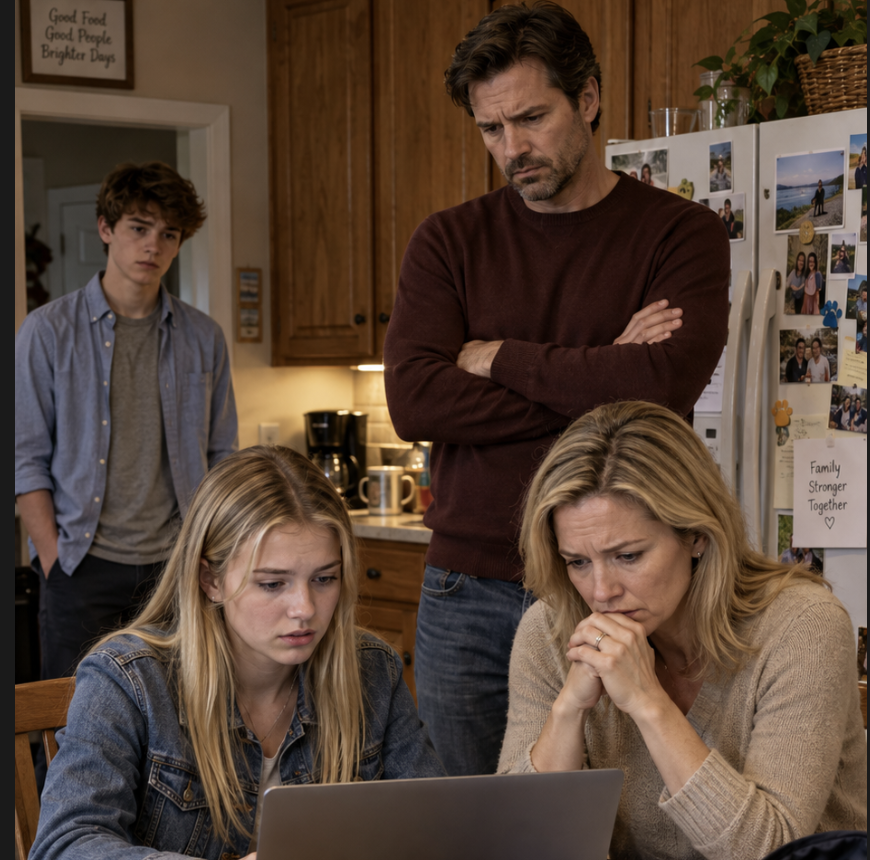
The memory of that afternoon remains etched into my consciousness with an incisive, clinical clarity that time has done nothing to blunt. Even now, if I close my eyes, I can see my mother sitting across from me at our immaculately scrubbed kitchen table. Her fingers were calmly intertwined, resting lightly against the polished oak surface as though we were having an ordinary weekend conversation about dinner menus or suburban carpools, rather than weighing the agonizing question of whether her daughter would be permitted to live. My father stood motionless just behind her high-backed chair, arms folded across his chest—a solemn, towering sentry standing guard over their collective conscience. Moments earlier, the sharp click of the landline receiver had signaled the end of their conversation with our health insurance provider.
I was already well aware that the experimental, life-saving therapy recommended by my oncologists was not covered by our policy. I knew the financial burden would be staggering, running well into six figures. Yet, with the naive assumptions of a protected child, I took it for granted that my parents possessed the resources to absorb the blow. It was not an infinite fortune, certainly, but throughout my childhood they had repeatedly boasted about a substantial rainy-day fund, an untouchable war chest set aside for catastrophic emergencies.
Terrified and desperate for reassurance, I looked across the table at them and asked, “So… what happens now?”
My mother met my gaze. Her face smoothed into that serenely placid, almost devotional expression she instinctively adopted whenever she was preparing to deliver a devastating decree under the guise of maternal wisdom.
“We aren’t going to move forward with the treatment, Elena,” she said softly.
In the immediate wake of her words, my mind flatly refused to process the data. The human psyche possesses an extraordinary defense mechanism designed to deflect horrors too monstrous to swallow whole. For a disoriented second, I assumed she meant they were merely seeking a second opinion, or perhaps negotiating a different protocol with the hospital board. I was shrouded in thick, bewildered confusion, not yet terror.
“What do you mean?” I asked, my voice barely audible above the hum of the refrigerator.
She released a faint, condescending sigh, tilting her head as though my incomprehension were a deliberate act of stubbornness that made an already tedious administrative chore harder on her. “Sweetheart, your father and I have prayed over this. We believe that if it is meant to be, God will see you through.”
I blinked, the air suddenly turning thin and caustic in my lungs. “What?”
My father finally broke his statuesque silence, clearing his throat with bureaucratic finality. “We simply cannot liquidate everything we have spent fifteen years building for an experimental gamble. Caleb starts university next year. His future, his tuition, his housing—all of it is already allocated, structured, and secured. We cannot throw all of that away.”
*Throw all of that away.* The phrase hung suspended in the sterile kitchen air, suffocating every instinct I had left.
I sat there staring at the two people who had brought me into the world. For a fleeting instant, the fundamental biological necessity of breathing seemed to abandon me entirely. I was never a foolish girl; I had known for years that my older brother Caleb was the undisputed golden boy of the Hart household. Caleb was showered with pristine designer wardrobes, enrolled in elite athletic camps, provided with private subject tutors, and sustained by an inexhaustible reservoir of parental devotion. I, by contrast, had grown up subsisting on whatever scraps of affection remained, existing primarily in the quiet margins he left behind.
Yet never—even in my most cynical, wounded moments—had I imagined they would actively calculate the ledger of our family and decide to let me die.
“You’re choosing his college over my life?” The question slipped past my lips, drained of volume, hollow and cracked.
My mother flinched, visibly offended by my unvarnished translation of their decision. “Do not phrase it like that, Elena. It isn’t a choice between you and him. We are simply placing our trust in God’s divine plan.”
I remained frozen in my chair. The pulse in my ears was a deafening roar of betrayal. A primal, wild impulse surged through my veins—to scream until my vocal cords shredded, to weep, to sweep every piece of fine porcelain off the counter and shatter it against the hardwood floor. But I did none of those things. The betrayal was so absolute that emotion gave way to shock. Slowly, methodically, I pushed my chair back, walked down the carpeted hallway to my bedroom, and clicked the door shut.
I did not emerge for the rest of the night. Neither of them ever knocked to check on me.
—
In that suffocating silence, an absolute truth crystallized in my mind: if I intended to survive past my sixteenth birthday, I would have to engineer my own salvation.
I opened my laptop in the dark, the screen’s harsh glare illuminating my pale face as I ventured into the strange mechanics of family law, welfare, and institutional custody. The search history I generated that night read like the frantic field notes of an animal caught in a snare:
*Can an unaccompanied minor legally emancipate from parents over medical neglect?*
*How to qualify for state-funded emergency Medicaid through foster care?*
*Does juvenile detention provide mandatory specialized healthcare to inmates?*
I was entirely serious about that final search. For nearly half an hour, I coldly calculated the logistics of committing a property crime—an infraction severe enough to mandate state custody, yet narrow enough to preserve my long-term future. I reasoned that a correctional institution would be legally compelled to provide medical intervention to avoid a civil rights lawsuit. Viewed through the lens of adulthood, the thought seems like pure madness, but mortal terror breeds its own desperate logic.
I researched legal emancipation, only to discover a labyrinth of bureaucratic hurdles requiring months of court hearings—a luxury of time my deteriorating body could not afford. I looked into youth shelters, but they were either at capacity or subject to mandatory parental notification laws that would return me straight to the house on Oakridge Lane. I refused to let my life dissolve into the hands of indifferent administrators while my parents maintained plausible deniability.
Then, through the fog of panic, a forgotten figure surfaced: Aunt Ruth.
Ruth was my mother’s older sister, estranged from the family for nearly seven years. She lived forty minutes away on the bruised eastern edge of the city. Within our household, Ruth was mentioned only in hushed, moralizing tones as a cautionary tale about wasted potential. My parents loved to mock her modest life. They ridiculed her walk-up apartment, her freelance work tutoring underprivileged kids, her lack of a husband, and her habit of spending whatever meager cash she had on stray rescue animals and used books.
Yet beneath their venom, my own memories of Ruth held a completely different warmth. During the rare family gatherings she attended before the falling out, Ruth had been the only adult who truly noticed me. She never offered the superficial, performative inquiries about my grades that relatives usually tossed out; she looked straight into my eyes and listened. With Ruth, I never felt like an auxiliary prop in Caleb’s grand narrative.
I did not call her that night. I was not yet ready to speak the truth aloud without shattering. My only objective was to survive until sunrise without letting my parents see me break. I packed a single duffel bag with three changes of clothes, my school textbooks, and my charger. From beneath a loose floorboard in the closet, I retrieved a metal tin holding every dollar I had saved from birthdays and odd chores: exactly seventy-three dollars.
I sat on the edge of the mattress until the digital clock turned 1:15 AM. I listened to the familiar rhythm of the house settling—the creak of floorboards above as my parents moved into the master bedroom, the heavy thud of their door closing, and the eventual hush of deep sleep.
Then, I slipped away. I left no impassioned letter on the counter. No dramatic accusations. I simply turned the deadbolt, slipped through the front door, and vanished into the autumn chill.
I walked five dark blocks until I reached a twenty-four-hour grocery store, taking refuge on a weathered wooden bench beneath the buzzing neon sign of the pharmacy drive-thru. For hours, I sat shivering under the blue-white glare, watching the rare delivery truck rumble past while the cold night air seeped into my joints.
Under that humming light, I performed an autopsy on my childhood. For fifteen years, I had labored under the comforting delusion that my parents loved me—perhaps not with the radiant, celebratory adoration they poured into Caleb, but at least with the baseline duty of parental care. I remembered my mother holding my hand through kindergarten, reading bedtime stories before Caleb entered middle school and monopolized every resource in the home. I remembered watching my father spend weekends patiently teaching Caleb how to parallel park, while I stood at the kitchen sink doing dishes, convincing myself that when my turn came, he would do the same for me.
With the unsparing clarity of someone facing an execution date, I finally saw the architecture of our home for what it was. When Caleb caught a bad case of the flu, the entire household went into quarantine; appointments were booked with private specialists, humidifiers were purchased, and meals were ferried upstairs on trays. When I developed pneumonia two winters later, my mother handed me a mug of lukewarm chamomile tea and told me that complaining was a character defect. When Caleb won third place at a regional science fair, my parents threw a catered backyard banquet. When I placed second in a statewide essay competition, my mother gave me an absent-minded nod and told me to take out the recycling.
The discrepancies were stitched into every detail of our daily existence. Caleb wore pristine, brand-name sneakers; I wore the same pair of scuffed athletic shoes for two straight years until the soles peeled away from the canvas. For his thirteenth birthday, Caleb received an expensive gaming laptop; for mine, I was handed a used, obsolete desktop that froze every twenty minutes. For years, I had treated their affection like a scarce scholarship—something I could eventually earn through academic perfection and flawless compliance.
In the eighth grade, I brought home a report card with straight A-pluses across all seven subjects. I handed it to my father, my chest tight with a fragile, childish hope. He barely glanced at the paper before sliding it back across the counter. “This is what is expected of you, Elena,” he said impassively. “Caleb has to work twice as hard to get B’s, so his achievements mean more.”
Even my fifteenth birthday, just two months before my diagnosis, had slipped by entirely unnoticed by my mother until 9:00 PM, when she sent a perfunctory text blaming a late meeting. I had celebrated by buying a stale chocolate cupcake from the school cafeteria and eating it alone in the freezing rain at the bus stop.
Still, despite the grinding weight of their neglect, I had never imagined they would literally price my survival against Caleb’s undergraduate degree. They valued a framed diploma from a prestigious university more than the beating of my heart.
When the sky softened from obsidian into bands of pale violet and gold, I took my phone from my pocket with numb, stiff fingers. I dialed Aunt Ruth’s number. The line clicked twice before her voice came through—raspy with sleep, but sharp and unmistakable.
“Hello?”
“Aunt Ruth,” I whispered, the dam finally breaking as tears seared down my cheeks. “It’s Elena.”
I braced myself for confusion, panic, or a scolding about the hour. Instead, her tone shifted instantly into absolute clarity.
“Where are you?”
I gave her the cross streets of the grocery store.
“Stay right there,” she said. “Do not move.”
—
Ten minutes later, a battered red sedan with a perpetually half-open rear window rattled into the parking lot. The moment Ruth stepped out onto the asphalt, the adrenaline holding me upright drained away. My knees buckled. I stumbled forward, and before she could even turn off the ignition, I collapsed against her coat.
Ruth did not demand an explanation. She did not scold me for running away in the middle of the night. She simply wrapped her arms around my trembling shoulders, held me against her chest, and let me sob until I couldn’t breathe. It felt as though I had been holding my breath for fifteen years, and Ruth was the first clean lungful of air I had ever taken.
We drove to her apartment in profound, comforting silence. Her home was precisely as my parents had derisively described it: cramped, perched at the top of a drafty, creaking walk-up with warped floorboards and windows that rattled against the wind. But the rooms smelled rich with cinnamon, cedar, old paperbacks, and clean laundry. It was the safest place I had ever entered.
That morning, she made me breakfast—scrambled eggs and buttered toast, served hot on a chip-rimmed ceramic plate. Only when I had finished eating did she sit across from me, her expression steady and calm.
“Tell me what happened, Elena.”
The story spilled out in fractured, uneven pieces. The oncologist’s bleak prognosis. The prohibitive cost of the targeted therapy. The calm, chilling serenity with which my mother had cited “God’s plan” to justify passive euthanasia. The grotesque reality that my life was being traded to protect Caleb’s college fund.
As I spoke, Ruth’s expression never cracked into hysterics, but I watched her knuckles turn bone-white where she gripped her coffee mug. When I finally ran out of words, the tiny kitchen fell dead silent.
She set her cup down. “You are never setting foot in that house again.”
“Ruth, your apartment,” I stammered, looking at the small space. “You don’t have the room, or the money for my treatment…”
“You let me worry about what I have,” she cut in, her voice leaving no room for argument. “Your only job is to stay alive. I will handle the rest.”
She didn’t suggest calling my parents to negotiate. She treated my survival as an absolute, non-negotiable imperative.
That afternoon, the campaign began. Ruth transformed her laminate kitchen table into a command station. She made dozens of calls—badgering clinic administrators, hunting down compassionate-use application forms, and negotiating payment structures with billing departments. By the end of the week, I watched in stunned silence as she pulled out property deeds and retirement accounts. Ruth put her modest condo on the market. She cashed out three decades of modest educator retirement savings, willingly incurring monstrous early-withdrawal penalties. She systematically dismantled her entire financial security to fund my treatments.
“Ruth, please don’t do this,” I begged her one night as she reviewed the numbers. “I am not your burden to carry.”
She looked up from her ledger, her eyes fierce. “Your parents are dead to me, Elena. But you are alive. And that is the only thing on this earth that matters right now.”
She never demanded gratitude. She never indulged in martyrdom. She simply sold what she had, moved us into an even cheaper, draftier rental on the city outskirts, and handed the proceeds over to an oncology team.
—
The year that followed stripped away any cinematic romanticism about illness. Recovery was an ugly, grueling, humiliating ordeal. It meant violent nausea that left me curled on bathroom tiles, bone-deep aches, and weeks where my white blood cell counts plummeted so low that sunlight felt like a physical threat.
Through every feverish night and every round of therapy, Ruth was an immovable pillar. She brewed ginger broth, fought through bureaucratic insurance appeals, and sat beside my bed during the worst nights, reading aloud when the pain made it impossible for me to speak.
Slowly, the medicine gained ground. My cell counts climbed. The tremors in my limbs ceased. My hair grew back in soft, dark waves. By the time I turned seventeen, the scans were clear.
With my physical strength restored, a cold, crystalline resolve settled into my chest. I felt no wild, hysterical rage toward Victor and Melissa Hart. What took root inside me was something far more disciplined: a patient, methodical determination. They had attempted to quietly erase me from their manicured suburban narrative, discarding me like a bad investment. I refused to let their pious cruelty remain buried.
I knew exactly where their armor was thinnest.
My parents ran an elite boutique educational consultancy. Their entire high-priced brand was predicated on an image of Christian family values, holistic character development, and academic mentorship. Their firm catered to affluent parents eager to groom their children for the Ivy League, and their business model relied almost entirely on the formal endorsement of one man: Dr. Malcolm Avery.
Dr. Avery was the formidable, uncompromising gatekeeper of the National Consortium of Independent Admissions Counselors. A formal recommendation from him was an institutional golden ticket. I remembered a dinner my parents had hosted for him years earlier. I had been instructed to wear a modest dress, speak only when addressed, and serve food while they paraded Caleb’s heavily padded achievements before him. Afterward, my father had boasted: *“As long as we hold Avery’s trust, our pipeline never dries up.”*
Sitting at Ruth’s weathered desk, I opened my laptop and drafted an email to Dr. Avery.
I did not write a hysterical screed. I wrote with the clinical detachment of an investigator. I introduced myself as Victor and Melissa Hart’s daughter. I provided the medical timeline of my diagnosis and attached the physician’s prognosis. I documented, with precise dates and figures, the funds my parents possessed versus the cost of the treatment they refused. I described my midnight escape and the financial ruin my aunt had embraced to save my life.
Then, I attached the documentary proof.
I uploaded the hospital’s rejection letter noting the withdrawal of parental financial consent. I attached a screenshot of a text message my mother had sent to Caleb during my hospitalization: *“Ignore your sister. She’ll come crawling back when she gets tired of playing the martyr.”* I included an email from my father to the clinic administrator: *“We cannot jeopardize our household’s established financial priorities for a speculative outcome.”*
I closed the email with a single paragraph:
> *“I believe that an organization dedicated to guiding young people into positions of societal leadership ought to be fully informed about the moral character of the counselors it endorses.”*
I did not tell Ruth. This reckoning belonged to me. I pressed send and closed the laptop.
The fallout was not an explosion; it was an institutional implosion. Dr. Avery never responded directly to my email, but he didn’t need to. Within three weeks, the Consortium’s accreditation seal vanished from my parents’ website. Their firm was quietly removed from the national registry without an announcement.
Then the dominoes began to topple. Prestigious private preparatory schools quietly cancelled their referral partnerships. Wealthy clients, terrified of social contagion and whispered rumors of child abandonment, terminated their retainers. My parents launched aggressive, desperate marketing campaigns, but in their insular, hyper-competitive industry, the loss of Avery’s blessing was an incurable wound.
Within eight months, their high-rent commercial suite downtown was shuttered. Within eighteen months, a foreclosure notice was posted on the front gate of the Oakridge house. They were forced into a bleak rental unit on the fringes of town, while former neighbors spoke of bitter, screaming arguments that echoed through the thin walls. They had gambled my life to protect their status, and in the end, they lost both.
—
While their world collapsed under the weight of its own rot, I went to work.
At nineteen, while attending university on a full merit scholarship, I launched an independent college-admissions consulting service. Unlike my parents’ polished factory for the privileged, I specialized in non-traditional, overlooked students—kids from rural areas, broken homes, and working-class backgrounds who had compelling stories but no idea how to navigate elite institutional gates. I knew how to help a student translate hardship into formidable personal essays.
The company grew with astonishing speed. Within three years, it was an enterprise generating high-six-figure revenues. The very first hire I made was Ruth, appointing her as operations director with an executive salary that dwarfed anything she had earned in her life. When she attempted to protest the compensation, I told her I would fire her if she argued.
For her sixtieth birthday, I blindfolded her and drove an hour north into the rolling hill country. I led her onto the cedar porch of a sunlit, stone-and-timber cottage overlooking a quiet lake. It had a wraparound garden for her rescue dogs, a soaring library with floor-to-ceiling shelves, and a mortgage paid off in full. We sat on the porch swing and wept until our throats were dry. A month later, I sent her on a three-week trip to Greece, fulfilling a dream she had kept pinned to her corkboard for forty years.
It was an image from that trip that drew the ghosts out of the dark.
Ruth had shared a photograph of herself on a sun-drenched terrace in Oia, the cerulean Aegean Sea stretching out behind her as she lifted a glass of white wine. Her caption read: *“To my brilliant niece, Elena. Thank you for giving me a life I never dared to imagine.”*
The internet is indifferent to estrangement. The algorithm somehow bridged the digital divide, pushing the post onto my parents’ radar. Within forty-eight hours, the communications began. Syrupy, panicked emails poured into my corporate inbox: *“Elena, darling, we are so proud of your achievements… We miss you every single day… The family needs to heal.”*
I blocked every address, every account, and every disposable phone number they used.
Yet desperation has a way of turning cowards brazen. They tracked my professional schedule and ambushed me outside a downtown hotel where I had just delivered the keynote address for an educational leadership summit.
As I walked toward the valet stand, two figures stepped out from behind a concrete pillar. The physical decay was jarring. My father, who had once prided himself on bespoke tailoring and an imposing presence, looked shrunken inside a limp, frayed suit jacket. His loafers were scuffed and unpolished. My mother’s hair was streaked with unkempt gray, her posture curved inward with defeat.
“Elena,” my mother whispered, taking a trembling step forward with her hands half-raised. “Please. Just five minutes.”
I stopped in my tracks. My face remained a mask of total composure. “Say what you came to say.”
“We know we made terrible mistakes,” my father pleaded, his voice cracking with a ragged, humiliating deference. “We were under unfathomable financial stress back then. We panicked. We weren’t thinking clearly.”
“No,” I replied, my voice steady, carrying the absolute chill of a delivered verdict. “You were thinking with immaculate clarity. You weighed the cost of my life against Caleb’s tuition, ran the numbers, and decided I wasn’t worth the investment.”
My mother flinched as if struck. “We saw what you did for Ruth… We had no idea you had reached such success, that you were capable of such generosity…”
A short, cold laugh escaped me. “Generosity? You mean the kind of generosity where an aunt sells her home and liquidates her life savings so a child doesn’t end up in an early grave?”
Neither of them could look me in the eye. They stared at the pavement.
“Caleb won’t speak to us either,” my father muttered, desperately playing his final card. “He blames us for the bankruptcy. Elena, we have nothing left. We are facing eviction next month. We aren’t asking for much—just enough to settle the arrears, a small bridge loan to help your parents get back on their feet.”
I looked at the two strangers standing before me in the bright afternoon sun. These were the architects of my execution, reduced to panhandling on a public sidewalk. I looked into myself for fury, for hatred, for some lingering trace of childhood agony. There was nothing. The well was bone-dry. They were merely two hollow, inconsequential people who had outlived their power to hurt me.
“Fifteen years ago, you told me you couldn’t afford to keep me alive,” I said quietly, making sure every syllable landed with precision. “Consider this me respecting your financial judgment.”
I turned on my heel, handed my ticket to the valet, and waited for my car. Behind me, the silence was absolute. Neither of them dared to take another step.
An hour later, I was back in the sunlit kitchen of the stone cottage by the lake. Ruth was chopping rosemary for dinner while classical music drifted from the radio. She asked how the conference had gone, and I told her the presentation had been a complete success. I never mentioned the encounters on the pavement outside the hotel; ghosts do not belong at a family table.
Instead, I opened a bottle of wine, poured two glasses, and pulled up an atlas so we could begin planning her next voyage.